

The Becker City Council convened on Tuesday, Nov. 18, for a meeting that centered on two key topics: a request for the city to issue conduit debt for a senior housing expansion in Albertville and updates to personnel policies to align with Minnesota’s new Paid Leave program.
Conduit Financing
The meeting began with an overview of conduit financing provided by an attorney with Dorsey. He explained how cities can legally assist nonprofit organizations by issuing tax-exempt debt on their behalf.
“Cities are allowed to issue tax-exempt debt,” he said. “They can offer that tax-exempt debt to 501(c)(3) nonprofits.”
It allows qualifying nonprofits to access lower-interest, tax-advantaged borrowing without placing financial risk on the issuing city. Essentially, the organization, not the city, is responsible.
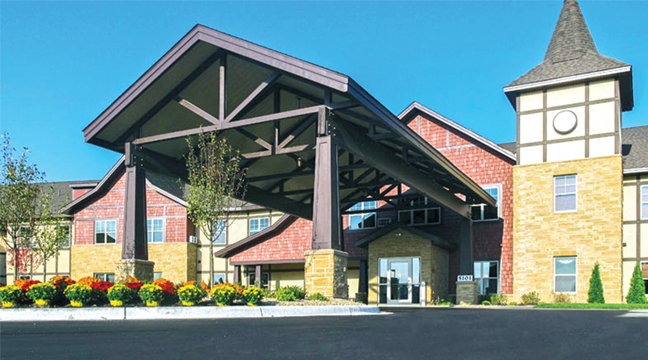
That organization is Guardian Angels, a nonprofit senior care provider operating throughout the region. They’re pursuing financing for a $30 million senior housing expansion in Albertville and requested that Becker serve as the issuer of tax-exempt notes—distinct from bonds—to support the project. These conduit notes would flow through the city of Becker solely to secure favorable financing terms; the city would hold no debt obligation or repayment responsibility.
To help the council better understand the project, Steve Koontz of EDI Development, a consultant for Guardian Angels, outlined the planned expansion. The existing Albertville facility includes 63 senior living units, offering a range of assisted living options. The new development would connect to the current building and add 86 independent-living units, significantly broadening housing availability for local seniors.
“Dirt has started to move,” Koontz noted, saying preliminary site work is already underway.
The project is expected to be completed by March 2027.
After brief discussion, the council voted unanimously to approve Resolution 25-59, authorizing Becker to issue the conduit notes requested for the expansion.
Paid Leave
Council then turned its attention to a major change forthcoming for employers statewide: Minnesota’s new Paid Leave program, which takes effect Jan. 1, 2026. Becker Clerk Shannon Mortenson, representing the statewide program, provided an overview of how the system will function and what cities and other employers should expect as the new system rolls out.
The program will offer employees paid medical or family leave funded through a statewide system similar to unemployment insurance. Participation is mandatory for most Minnesota workers, though employers may adopt a private plan if it meets or exceeds state standards. Mortenson emphasized that the cost of participation will be shared between employers and employees.
“Not more than 50% is paid by the employee,” she said, with the remainder covered by employers.
In response, city staff presented updates to Chapters 10 and 11 of Becker’s personnel policy manual to ensure compliance with the new law. The revisions formally incorporate Paid Leave program requirements and clarify how leave benefits will be administered beginning in 2026.
Council members expressed support for the updates, and the changes were approved unanimously.
The meeting adjourned with both action items receiving full council backing—supporting a major regional senior housing investment while preparing Becker’s internal policies for a significant statewide shift in employee leave benefits.