
Sherburne County is in the process of developing a rural street lighting policy.
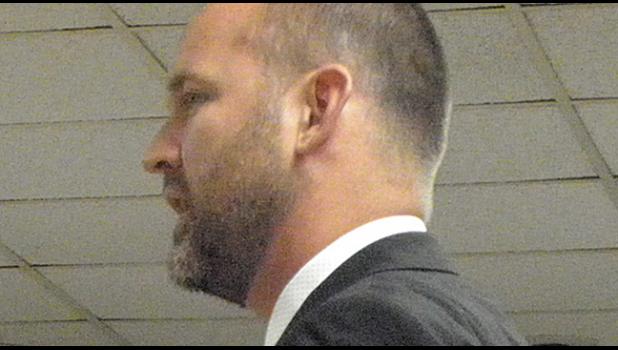
At a county board workshop Tuesday, Public Works Director Andrew Witter said a street lighting policy would improve safety on rural county roads.
“One of the big issues is county road safety, and one of the most beneficial in the cost-benefit ratio standpoint is rural intersection lighting,” he said. “We don’t have a policy currently. But rural intersections are one of the areas with high accident rates, both single-vehicle as well as multi-vehicle accidents.”
Research by the Minnesota Local Road Research Board has concluded the installation of streetlights at rural intersection offers a low-cost and effective strategy for mitigation of nighttime vehicle crashes. Published reports have found the installation of lighting at rural intersections resulted in a 20% to 50% percent reduction in the nighttime crash frequency. A benefit-cost analysis indicated the crash reduction benefits outweigh the costs by a 15:1 ratio.
Witter said newer technology has also helped reduce the cost of installation and maintenence of street lights.
“That’s specifically the result of eliminating halogen light bulbs and going with LED,” he said.
“There’s new LED technology in the last five to 10 years - being able to get the light spread in the necessary pattern that they didn’t have when they first came out. So those costs and ongoing electrical maintenance costs are much lower than they used to be with halogen bulbs.”
He said the newer LED technology also allows lights to be less intrusive where people prefer not to have lighting in rural areas.
“The directional lighting and light fixture designs allow dark skies and street lights to co-mingle,” he said.
Witter said there are about 75 key county road to county road intersections, and they will use a rating system to decide which ones are priorities.
The criteria includes a number of risk factors, including: geometry of the intersection; geometry of roadways (on/near curve—both vertical and horizontal); commercial development in quadrants; distance to previous STOP sign; Average Daily Traffic (ADT) ratio; railroad crossings on minor approach and crash history.
“We need to identify those characteristics that are frequently involved with fatal and severe crashes,” he said.
Witter said public works is willing to take on both the installation and maintenance associated with the program. He said the exact cost is not yet determined, but with grant money, it shouldn’t be too costly.
“If we have a systemic procedure and a policy, installation will qualify for Highway Safety Improvement Program (HSIP) federal funding,” he said. “It would be our intention to come up with a prioritization of intersections and start soliciting HSIP for funds.”
Witter said he will do more research on the cost and look at data concerning current rural development before bringing the policy to the board for a vote.
The goal is to implement the policy and begin the program as soon as spring, 2020.